 |
|
|
|
|
|
|
|
|
|
|
|
|
|
|
|
|
|
|
|
|
|
|
|
|
|
|
|
|
|
|
|
|
|
|
|
|
|
|
|
|
|
|
|
|
|
|
|
|
|
|
|
|
|
|
|
|
|
|
CALL 401 294
1030
TO ORDER OR WITH ANY QUESTIONS
E-MAIL; beckmannltd@gmail.com
|
|
|
|
|
 |
|
|
|
 |
|
|
|
|
|
|
|
|
|
|
|
|
|
|
|
|
Electric Boat Drive
Systems are available for almost any
type of
boat, and are capable of driving that boat at
hull speeds comparable
with speeds produced by internal combustion
engines. The big
advantage of electric drives are simplicity,
ease of operation, and
quietness of operation. Cruising range
using electric drives are
solely a function of the stored battery power
and the rate (speed) of
discharge. Electric boats are generally
designed and built so as
to move through the water easily. When an
electric drive is to be
used to move a large sailboat, for example, a
compromise must be made
with regard to speed and duration. Moving
such a boat to clear
the harbor or to return to the dock from the
mouth of the harbor is an
ideal application of electric power. The
retrofit of an electric
drive systems is very practical; it is simple to
replace a noisy,
smelly, and difficult to start auxiliary
engine. The number of
batteries required generally fit into the
existing engine space and the
total weight of the electric motor, controls and
batteries are
generally less than the weight of the engine and
fuel of the internal
combustion system.
|
|
|
Perhaps, the most
compact,
practical and efficient way to power your vessel
with Electric Power.
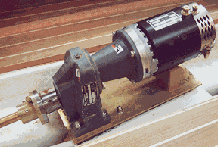
System measures 8"w x 8"h x22"OAL.
Fits in the tightest of spaces!!
|
|
|
|
|
|
|
|
|
|
 |
|
|
|
|
|
|
|
|
|
|
|
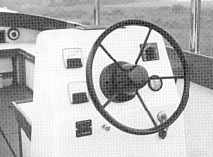
On the
Console:
Volt
Meter
Throttle
Amp Meter
Battery Fuel Gage
Key On/Off
|
|
|
|
|
|
|
|
|
|
|
|
|
|
|
|
|
|
Electric
Drive Systems are very
simple. They consists of an
electric storage battery, a speed
(voltage) controller with throttle,
and a dc electric motor. In
order to have the boat's propeller
turn at an efficient slow rotation,
a reduction gear is an integral part
of the motor. To be able to
reverse the direction of the propeller
there is a switch in the
throttle that controls a
forward/reverse relay that alters the
rotation
of the motor. To ascertain
information about the operation of the
motor, volt and ampere meters are
provided; also a battery "fuel gage"
with LED readout informs about the
power available in the battery
bank. A keyed lock prevents
unwanted use of the system. The
batteries are recharged by plugging
the line cord into the dock
receptacle. The recharging is
automatic and rapid so that
overnight is more than adequate
recharging time. The recharging
system automatically regulates the
charging rate so that the batteries
will not be over or under
charged. Completely sealed
batteries
can be used so that gas problems are
minimized and spillage is not a
concern.
|
|
|
|
|
|
|
|
|
|
|
|
|
Installation: Upper
Right: shows the compact Electric Propulsion
Unit (a compact motor and reduction gear) that
is about 22" long and
less than 8" high. This unit is placed in
direct line with
the propeller shaft and is attached between the
engine beds
stringers. System controls may be
installed in a console as shown
(Above
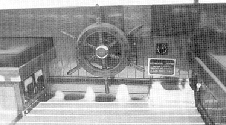
Right), or integrated into the various
features of the boat as (Below), where the
meters are installed in
the seat risers (to the left) while the throttle
is placed at the right
hand of the helmsman in the cover boards just
above the name plaque, to
the right of the wheel
|
|
|
|
|
|
|
|
|
|
|
|
 |
|
|
|
|
|
|
|
|
|
|
|
|
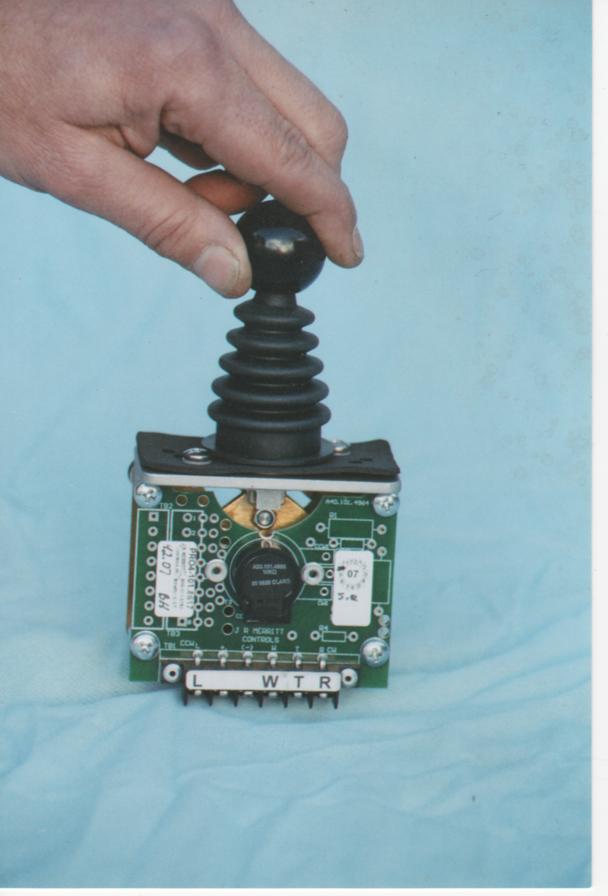
Joystick
Control
now
included!
|
|
|
|
|
|
|
|
|
|
|
|
|
|
|
|
Compact
Electric
Propulsion Unit
has many advantages over Belts and
Pulleys:
1.
There
are fewer moving parts in the Electric
Propulsion Unit.
2. The Electric Propulsion Unit has the
required thrust bearing and is
sealed and lubricated.
3. Unified construction eliminates
line-up problems.
4. No wet and soggy belts to break
5. No danger of fingers getting into
belts and pulleys.
6. No need to tighten belts, adjust tension,
or realign
shafts.
7. The compact Electric Propulsion
Unit uses less valuable space
than pulleys and belts.
8. Over
one hundred speed reduction
ratios are available, so that
it is possible to exactly match your
boat's needs.
Call Lloyd 401 294 1030 to discuss.
|
|
|
We can
size our Electric Drive to
suit your existing prop size.
|
|
|
|
|
|
|
 |
|
|
|
|
|
|
|
|
|
|
|
|
|
|
|
|
A complete Electric Boat
Drive System operating on 24, 36,
or 48 volt battery banks consists of:
Electric
Propulsion
Unit;
Series wound motor (0 to 10 HP) and reduction
gear
Voltage (speed) Controller
Throttle/Reverse Switch with encapsulated
relay
Key On/Off with encapsulated relay
Instruments: 0-50 DC volt
meter
0-200 amp meter (with 200 amp
shunt)
Battery LED Fuel Gauge
Battery charger (Automatic)
Fuses, Wiring, Terminals and Circuit
Diagram
Packaging
COMPLETE KIT!! Just add batteries!
|
|
|
Call
Lloyd to discuss your requirements!
401 294 1030
|
|
|
|
|
|
|
|
 |
|
|
|
|
|
|
|
|
|
|
|
|
Complete
Systems:
Total price 24 volt system
$4,595.00
Total price 36 volt system
$4,795.00
Total price 48 volt system
$4,995.00
|
|
|
|
|
|
|
|
 |
|
|
|
|
|
|
|
|
|
|
|
|
|
|
|
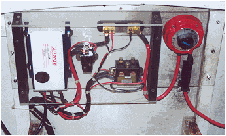
At
Left: Red battery switch,
reverse relay, amp
meter shunt, and voltage controller
retrofit in a Chris Craft Runabout.
|
|
|
|
|
|
|
|
|
|